Asphalt Paving in Wichita, KS
New asphalt driveways and surfaces for Wichita homes and Sedgwick County properties — graded, based, and rolled to hold up on the expansive clay under this part of Kansas, through hard winters and hot summers alike.
Call (316) 368-2270 for a Free Estimate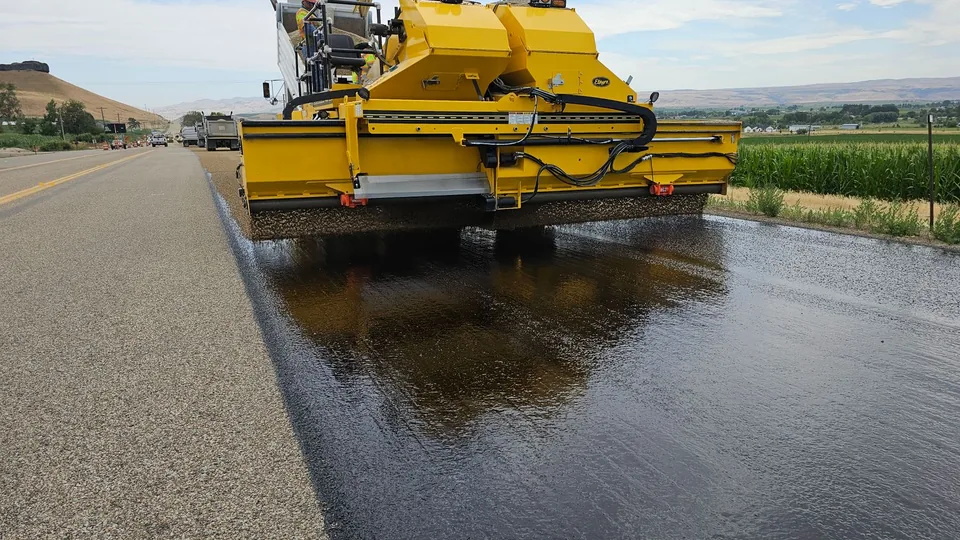
A new asphalt driveway is mostly the part you never see. The smooth black surface is the last couple of inches; underneath it is the grading and the compacted stone base, and that foundation is what decides whether the driveway lasts twenty years or cracks apart in three. We put the work there first — shaping the ground so water drains away, building and compacting a stone base sized to the load, and only then laying and rolling the mat. On the clay soils here, skipping that prep is the single most expensive mistake a homeowner can make.
The process is the same whether it is a short residential driveway, a longer private drive, or a fresh pad: read the site and the drainage, set a grade that sheds water, build the base, pave, and compact to a tight, sealed finish. We match the asphalt thickness to how the surface will actually be used, because a mat built for a family sedan will not stand up under a truck, a trailer, or an RV parked in the same spot through a Kansas July.
The Base Is the Job on Sedgwick County Clay
Much of the Wichita area sits on expansive clay, and clay is the reason paving has to be done right here rather than cheaply. It does not drain well, and it changes volume with moisture: it swells as it takes on water through a wet spring and shrinks and cracks as it bakes dry in summer. That movement never stops, and a stiff asphalt mat laid straight onto it rides that motion until it cracks and settles. The fix is a properly built base that separates the asphalt from the raw clay and spreads the load, so the surface is not tied directly to ground that is always shifting underfoot.
That means shaping and compacting the subgrade, then building a crushed-stone base in compacted lifts and setting the grade so water runs off instead of soaking in along the edges. Base depth is matched to use, never guessed — a car driveway needs less than a drive that carries trucks and trailers. Anyone quoting an identical build for every job is not measuring the one thing that decides how long it holds, and on clay an under-built base is a failure with a delay on it, not a saving.
Built for Real Winters and Hot Summers
Kansas gives asphalt a genuine workout at both ends of the year, and the base of expansive clay makes each season harder. Winter is the one Wichita feels most: real cold means repeated freeze-thaw cycles, where any water that has worked into the surface freezes, expands, and pries cracks a little wider each time it turns over — which is why so much surface damage shows up in late winter and early spring. Summer brings the opposite stress, with heat hot enough to soften asphalt so a mat that is too thin for its load scuffs and ruts under turning tires on the worst afternoons.
None of that is hard to build for, but it has to be done deliberately. Enough mat thickness carries the heat and the weight, a dense well-rolled surface keeps water from getting in to begin with, a true grade throws our rain and snowmelt off instead of ponding it over the clay, and sealcoating every couple of years fends off the sun while closing the top against moisture. Do all of it and an asphalt driveway here gives you fifteen to twenty years, and more when the base and the drainage were built right; leave any of it out and the clay, the cold, and the heat find the gap fast.
Drainage Comes First, Not Last
On soil that drains as slowly as this clay does, water management is not a finishing detail — it is half of whether the driveway survives. Water that sits on the surface or runs the edge with no outlet has all day to soak down, and saturated clay swells, softens, and moves. A drive that ponds after every storm is on a countdown no matter how good the asphalt looks the day it goes down.
So the water gets planned before the paving does. On flat ground that means building a crown or a steady cross-fall so the surface drains to the sides, and sometimes reworking a shoulder or a swale to carry the runoff away. Done right, the driveway sheds water within minutes of the rain stopping and the clay underneath stays as stable as clay gets. Done wrong, the base stays wet, and a wet base under Kansas clay is where every larger failure begins.
Residential First
The focus here is the homeowner. New driveways, private drives on larger lots, and fresh residential surfaces are the core of the work — built for how a family actually uses a driveway, priced for a home rather than a commercial contract, and finished to look sharp from the street. A driveway is the first thing people see of a house and a surface the family touches every day, and it is worth building once, correctly, for the ground we have.
That homeowner focus is deliberate. The bigger paving names in this market chase commercial lots and multi-service contracts; the driveway in front of your house is often an afterthought to them. Here it is the whole point, and you get a straight recommendation on what your property actually needs, including when the smaller or cheaper option is the honest one.
Weighing what a new drive runs? See asphalt driveway cost in Wichita and what moves the number. If your existing driveway is cracked rather than gone, asphalt repair or an overlay may be the smarter first step.
What’s Included
- Site assessment and a drainage and grading plan for the lot
- Compacted crushed-stone base built for the load and the clay
- Hot-mix asphalt laid and rolled to a smooth, sealed finish
- Mat thickness sized to real use — cars, trucks, trailers, or RVs
- New residential driveways, private drives, and fresh surfaces
Why It Matters in Wichita
Wichita and the towns around it are growing onto ground that punishes a shortcut — expansive clay that holds water and moves with the seasons. A properly based asphalt driveway is the practical, low-maintenance choice here, but only when the base and the slope are built for soil that swells in a wet spring and shrinks in a dry August rather than against it. Get that part right and the surface on top takes care of itself for years.
Frequently Asked Questions
Why does the base matter so much for a Wichita driveway?
Because the ground here is expansive clay that swells when wet and shrinks when dry, so it is constantly moving under the surface. A compacted stone base separates the asphalt from that moving clay and spreads the load, which is what keeps the mat from cracking and settling. On this soil the base is most of what you are paying for, even though it is the part nobody sees.
How long does a new asphalt driveway last here?
Figure fifteen to twenty years for a well-built, well-drained driveway, and longer when the base and the water were truly handled. What sets the number is the base itself, keeping water moving off the surface, and sealing cracks before winter drives moisture down into the clay. A driveway set on clay that was never compacted right lasts far less, and the base fails before the surface does.
When is the best time of year to pave in Wichita?
Asphalt goes down best in warm, dry weather — roughly April through October here, when temperatures hold above about fifty degrees and rising. We watch the forecast for a dry window and plan around storms, since fresh asphalt and heavy rain do not mix. Winter paving is avoided because the mat needs warmth to compact properly.
How soon can I drive on a new asphalt surface?
Usually within a day or two for normal use, but it keeps hardening for several weeks. In summer heat, be easy on it at first — avoid sharp turns while stopped and keep trailer jacks and kickstands off the fresh mat, since it stays soft in the afternoon sun. We give you the specifics for your job and the weather that week.
Can you pave a longer private drive on acreage?
Yes. Longer drives on the larger lots around the county are regular work, and the grading and drainage matter even more over a long run because water gathers volume along the way and the low end saturates first. We size the base to the real traffic and set the fall so the whole length sheds water rather than ponding at the bottom.
Do you do commercial lots, or just driveways?
The focus is residential driveways and private drives — that is the open lane in this market. We do offer parking lot paving where it fits, but we do not position ourselves as a commercial contractor. If your project is a home driveway, that is exactly the work this site is built around, and you will get a straight, homeowner-focused answer.
Other Services
Free Asphalt Paving Estimate in Wichita
Free, no-obligation estimates across Sedgwick County. Tell us about your driveway, your cracks and potholes, or your lot.
Call (316) 368-2270Prefer to send it in writing? Call (316) 368-2270 and we’ll get right back to you.