Asphalt Paving & Repair in Goddard, KS
Fresh driveway installation, crack and pothole repair, resurfacing, and sealcoating for Goddard homeowners — a fast-growing town west of Wichita, where most driveways are recent and how each one was built decides how it ages.
Call (316) 368-2270 for a Free Quote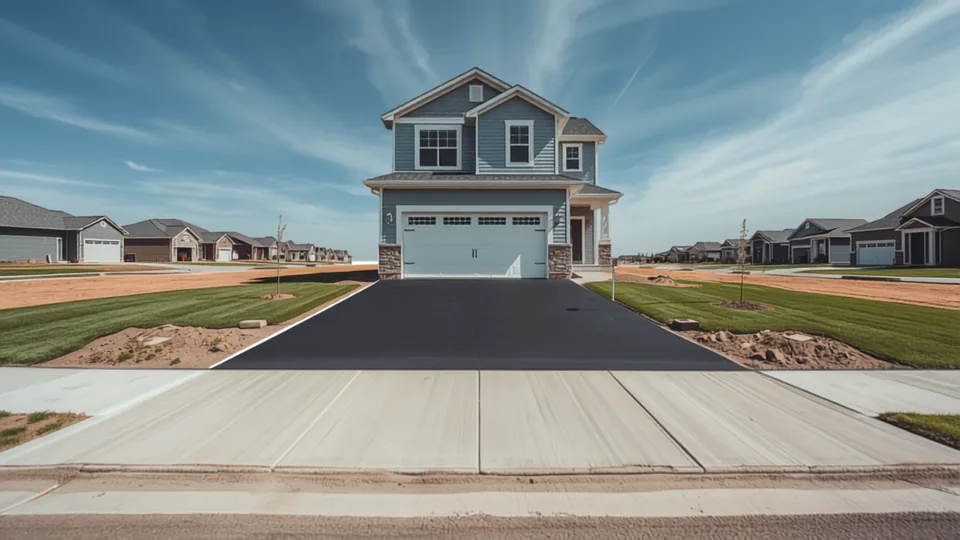
Few corners of the metro have expanded faster than Goddard, and a growing town lays down a great many driveways. The bulk of them are recent, poured as the subdivisions west of the city filled in, which throws the spotlight straight onto construction quality — because a driveway is only as good as the support poured beneath it, and support trimmed to fit a builder's budget shows up as cracks a couple of winters on. In a town this new, the driveways going in today are writing the repair bills of the coming decade.
The soil is indifferent to how new the house is. Goddard sits over the same expansive clay as everywhere around Wichita — the kind that drinks in water and swells, then dries and draws back, shifting under whatever rests on top. A driveway anchored straight to that clay works loose and fractures; one carried on a packed stone cushion rides above the movement. That distinction, invisible the day the trucks pull away, is the whole story of which Goddard driveways endure.
The Cost of a Rushed Foundation
A production builder closing a house on schedule has every incentive to spend as little as possible on the driveway, and the easiest corner to trim is the layer buried under the asphalt. Skimp on the stone or the compaction and nothing looks amiss at handover; the trouble arrives a season or two later, once the clay has run through a soaked spring and a scorching summer and the surface begins to map out cracks. By then the shortcut belongs to the homeowner.
Doing it properly instead is not complicated, only deliberate: firm and pack the ground, build the stone cushion in layers to the weight it will carry, and pitch the top so rain runs off rather than pooling. Those steps are the whole difference between a Goddard driveway that shrugs off the seasons and one patched before the landscaping has matured.
Flat Ground and Where the Water Goes
Much of the land on Goddard's west side lies flat, and flat ground is deceptively hard on a driveway, because water has nowhere obvious to travel. A surface not deliberately shaped to drain will hold sheets of standing water after a storm, and standing water is just what the clay below craves — it soaks in, swells, and softens the support until the asphalt loses its footing. On level lots the crown and the fall have to be engineered in on purpose.
Then the winters compound it. Water that pools and later freezes lifts and splits a surface far worse than water that ran off, so on flat Goddard lots the grading is not a finishing nicety but the primary defense against the freeze. A driveway shaped to shed water stays dry beneath; one left flat becomes a shallow pond that freezes solid and tears the top apart.
New Now, Maintained for Later
Because so much of Goddard is recent, most of its driveways are still young, and young is the least costly age to protect one. A surface only a few years old is sound but starting to dry out and open its first thin cracks, and sealing it and closing those cracks now keeps water from the support before any harm is done. Delay, and that same driveway ages into a repair job well ahead of its time.
This kind of upkeep is exactly what a fast-building town receives least of, since the paving crews are busy pursuing the next contract rather than tending a four-year-old surface. Yet on this clay it is the shrewdest money a homeowner can spend — modest, routine, and aimed at the support, which is the expensive layer worth guarding.
A new driveway begins with asphalt paving; a young one is protected with sealcoating and early crack repair. See what it costs to plan the work.
Services We Offer in Goddard
Frequently Asked Questions
Do you serve Goddard and the new subdivisions west of Wichita?
Yes. Goddard, out on the fast-growing west side, is a town we cover often — new subdivisions and rural properties toward the open country alike. Quotes cost nothing and are made on site, since the support condition that drives the price has to be seen to be judged.
Is a builder's driveway on my new Goddard home built to last?
Not necessarily. A driveway poured on a tight construction schedule often carries the least money in the layer that matters most, and on expansive clay a thin or poorly packed foundation fractures within a couple of winters. If yours is already showing cracks, sealing and repairing it early keeps water from the support; if it needs more, you will get a straight assessment of what.
My lot is flat — is that a problem for a driveway?
It can be, because flat ground gives water nowhere to drain, and standing water is what soaks into the clay and softens a foundation. A driveway on a level lot has to be shaped with a crown or a fall built in deliberately so rain runs off. Done right it stays dry beneath; left truly flat it pools, and in winter that pool freezes and tears the surface up.
How soon should I seal a new driveway in Goddard?
Let a brand-new surface cure first, usually a season or more, then seal it and hold to a two-to-three-year habit afterward. On a driveway already a few years old, sooner is better — sealing and closing the first cracks keeps water from the support before the winters widen them. The aim is guarding the foundation while the top is still sound.
Why spend on upkeep for a nearly new driveway?
Because upkeep is cheapest and most effective before anything has gone wrong. Sealing a sound surface and closing its first cracks keeps moisture from the support, where the clay and the freeze would otherwise begin the costly failures. A little spent now guards the expensive layer beneath; waiting trades that for a far larger bill once water has gotten in.
Free Paving Estimate in Goddard
Free, no-obligation estimates across Sedgwick County. Tell us about your driveway, your cracks and potholes, or your lot.
Call (316) 368-2270Prefer to send it in writing? Call (316) 368-2270 and we’ll get right back to you.